
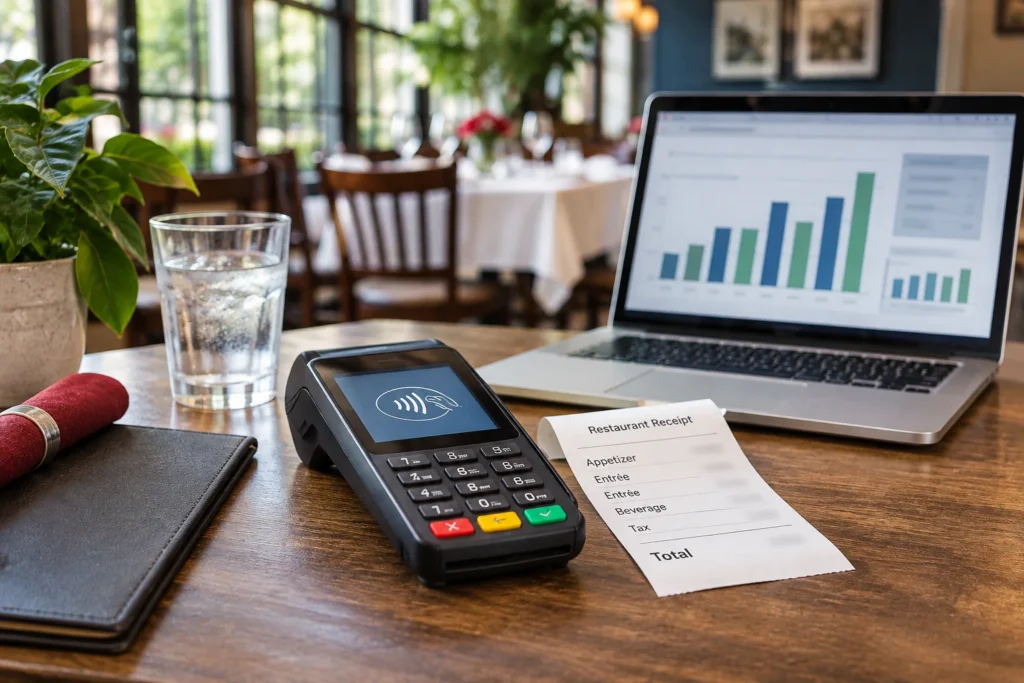

Restaurant processing fees include much more than the percentage advertised by a credit card processor. Restaurant owners may pay card-network charges, processor markup, per-transaction fees, online payment charges, POS software subscriptions, dispute fees, and other expenses associated with accepting customer payments.
For a restaurant, understanding these costs is especially important because transactions can involve tips, small tickets, online ordering, takeout, delivery, and different payment devices.
A quick-service restaurant processing hundreds of small orders may have a different effective processing cost than a full-service restaurant accepting larger checks with gratuities.
Likewise, an establishment collecting payments through its website may face different costs from those associated with cards presented at the counter.
Since co-founding Valued Merchant Services in 2006, I’ve helped business owners understand processing statements, payment equipment, and pricing arrangements.
One lesson has remained consistent: a restaurant cannot evaluate its processing costs accurately by looking at one quoted percentage.
This guide explains nine restaurant processing fees and cost categories worth reviewing, how to calculate the true monthly expense, which restaurant workflows deserve special attention, and what to ask before changing payment providers.
Restaurant Processing Fees: The Quick Answer
9 Payment Cost Categories Restaurant Owners Should Check
- Interchange and card-network assessments: Underlying costs associated with eligible card transactions.
- Processor markup: The fees charged under your merchant pricing agreement.
- Per-transaction charges: Fixed costs that can have a larger impact on small tickets.
- Card-not-present payments: Online, keyed, and other eligible remote-payment transactions.
- Tip adjustments and settlement: The procedures and potential costs involved in restaurant gratuity workflows.
- Online ordering and delivery: Gateway, platform, and payment-related charges that must be distinguished.
- POS software and hardware: Registers, handheld devices, kitchen integrations, and subscriptions.
- Refunds, disputes, and chargebacks: Transaction reversals and related contractual costs.
- Funding and miscellaneous account charges: Deposit-related options and other recurring or incidental expenses.
Not every restaurant pays every charge. The specific costs depend on the processing agreement, payment methods, POS system, and services used.
How Do Restaurant Credit Card Processing Fees Work?
When a guest pays with an eligible card, the transaction moves through the payment system under the restaurant’s merchant processing arrangement.
Depending on the pricing model, the restaurant may pay a combination of underlying interchange, network assessments, processor fees, and related account charges.
Some providers bundle selected charges into a flat-rate price. Others use interchange-plus, tiered, subscription, or other structures.
Therefore, two restaurant owners with similar sales volumes may receive very different statements.
Transaction characteristics also matter. Card type, payment channel, settlement information, and other factors can affect the applicable costs.
The Federal Reserve Bank of Kansas City publishes information about credit and debit interchange fees across merchant categories, including quick-service restaurants.
Its August 2026 interchange data update is a useful reminder that card-network costs vary and should not be represented by one universal restaurant rate.
However, those schedules are not the same thing as the complete price an individual restaurant pays its processor.
9 Restaurant Processing Fees and Costs to Review
1. Interchange and Card-Network Assessments
Interchange is one component of the cost associated with eligible card transactions.
Card-network assessments and other applicable network charges may also apply.
Under interchange-plus pricing, these components can appear separately from the processor’s markup.
Under a bundled model, the merchant may instead see a combined transaction rate.
Restaurants should understand that debit, consumer credit, rewards credit, and other card types can have different underlying economics.
However, a merchant’s visible charges depend on the actual pricing agreement.
What to check: Ask which charges are passed through, which are included in the advertised rate, and how your transaction mix affects the bill.
2. Processor Markup and Pricing Structure
The processor’s pricing arrangement determines how its compensation and selected processing charges appear on the merchant statement.
For example, an interchange-plus arrangement may identify processor markup separately from underlying interchange and assessments.
A flat-rate arrangement might combine several components into one percentage and fixed transaction charge.
Neither structure is automatically better for every restaurant.
The correct comparison uses the same card sales, transaction counts, payment channels, and required services.
What to check: Request the complete processing fee schedule rather than comparing isolated advertised percentages.
3. Per-Transaction Fees and Small Restaurant Tickets
A fixed charge on every transaction can have a significant impact when customers frequently make small purchases.
Consider a hypothetical payment rate of 2.60% plus $0.15 per transaction.
On a $10 purchase, the fee would be:
($10 × 2.60%) + $0.15 = $0.41.
That represents 4.10% of the transaction amount.
On a $50 purchase, the same formula produces:
($50 × 2.60%) + $0.15 = $1.45.
That represents 2.90% of the transaction amount.
The underlying advertised rate hasn’t changed. However, the fixed component represents a larger share of the smaller ticket.
This distinction is especially relevant to coffee shops, bakeries, quick-service restaurants, and other businesses with frequent low-dollar purchases.
These rates and transaction amounts are hypothetical and are not current VMS or provider quotes.
What to check: Compare processing expenses using your actual average ticket, total transactions, and card mix.
4. Card-Not-Present and Online Payment Charges
Restaurants increasingly accept payments through websites, online ordering applications, telephone orders, and other remote channels.
Depending on the payment method and processing arrangement, these transactions can be priced differently from eligible in-person chip or contactless payments.
For example, Square publicly distinguishes in-person processing from online transactions and manual card entry, with rates that vary by plan.
See Square’s current restaurant pricing for an example of how a provider differentiates transaction channels.
However, an online order does not automatically mean that the restaurant processes the resulting card transaction under its own merchant account.
In some arrangements, another platform handles payment collection and later remits funds to the restaurant.
What to check: Identify which company processes each type of order, which fees apply, and where the related deposits appear.
5. Tip Adjustments, Authorization and Settlement
Tips make restaurant payments different from many conventional retail transactions.
Depending on the restaurant’s system, the customer may add a tip before payment authorization or after an initial authorization.
The correct procedure depends on the payment method, card-network rules, merchant category, and payment application’s capabilities.
For example, certain transactions require the gratuity to be included in the authorization amount.
Other eligible restaurant transactions may permit a post-authorization tip adjustment within specified limits.
Mastercard’s U.S. card-not-present restaurant tip tolerance guidance illustrates why the exact transaction category matters. The applicable tolerance should not be assumed to be identical for every card network, payment method, or restaurant transaction.
Review the relevant provider guidance and the current Mastercard rules with your processor.
Why Tip Procedures Matter Financially
A poorly configured tip workflow can lead to unnecessary adjustments, authorization problems, settlement differences, or additional administrative work.
Owners should also understand how tips appear in POS sales reports, employee records, and merchant settlement totals.
What to check: Demonstrate the actual workflow for counter tips, signed receipts, tableside payments, and online or delivery tips before selecting a system.
6. Online Ordering, Delivery and Payment Platform Costs
A restaurant may pay separate charges for online ordering software, delivery-platform services, payment processing, and related technology.
Those charges should not automatically be combined into one category called credit card fees.
For example, a third-party delivery platform may charge for marketplace services, marketing, or order fulfillment in addition to any payment-related charges.
Alternatively, the restaurant may operate its own website and use a separate payment gateway or ecommerce application.
Those arrangements can have different financial and accounting consequences.
Therefore, the owner should distinguish:
- Payment-processing fees
- Online ordering software subscriptions
- Gateway or ecommerce charges
- Delivery-platform commissions or service fees
- Customer-funded tips and delivery charges
- Refunds, adjustments, and promotional discounts
What to check: Identify who collects the payment, what each provider deducts, and how the restaurant reconciles the resulting payout.
7. POS Software, Terminals and Restaurant Equipment
Restaurant payment systems often include more than one checkout device.
A full-service restaurant may use countertop POS stations, handheld terminals, kitchen displays, printers, and software for managing orders or employees.
A quick-service establishment may require fewer components, but still depend on menu modifiers, tipping prompts, and kitchen communication.
Software subscriptions and device agreements can add recurring costs separate from card-processing fees.
Also, equipment financing, rentals, and leases may have obligations that continue independently of the merchant account.
Our Clover POS guide discusses software plans, hardware, processing compatibility, and ownership considerations.
For the broader equipment decision, see how to choose the best POS system for your business.
What to check: Calculate the complete hardware and software cost over the anticipated term, including additional devices and locations.
8. Refund, Dispute and Chargeback Fees
Even a well-managed restaurant can encounter disputed payments or refund requests.
Depending on the processing agreement, chargebacks and other transaction adjustments may involve additional costs.
A processor may also handle the original processing charges differently when a transaction is refunded.
Restaurants should confirm those policies instead of assuming the entire original processing fee will always be returned.
Accurate order records, clear descriptions, properly processed refunds, and good customer service can help manage certain dispute risks.
However, no payment provider can guarantee that chargebacks will never occur.
Our guide to preventing credit card chargebacks
What to check: Ask about refund handling, chargeback fees, notification deadlines, and the records your restaurant needs for disputed transactions.
9. Funding and Other Merchant Account Expenses
Restaurants rely on steady cash flow to cover payroll, food costs, utilities, and other obligations.
Therefore, the timing of card deposits can be as important as the transaction rate.
Payment authorization, transaction settlement, and actual bank funding are separate stages.
Deposit timing depends on the acquiring program, settlement cutoff, bank processing, weekends, holidays, account eligibility, and other conditions.
Some qualifying merchants may have access to faster funding options.
At VMS, eligible arrangements may provide Instant, Same Day, or Next Day Funding, subject to the applicable program.
Other account-related expenses may include monthly services, statement charges, or specified optional features.
What to check: Ask for the deposit schedule, funding eligibility, cutoff times, associated charges, and complete list of account fees.
Restaurant Processing Fees: A Complete Monthly Cost Example
To see how these expenses interact, consider a hypothetical restaurant with $60,000 in monthly card sales and 2,000 card transactions.
For illustration, assume the restaurant processes:
- $40,000 through eligible in-person payments across 1,500 transactions.
- $20,000 through online payments across 500 transactions.
Suppose the fictional processing arrangement charges 2.60% plus $0.15 for the in-person activity and 3.30% plus $0.30 for online payments.
Also assume the business pays $125 per month for its POS software.
| Cost component | Calculation | Monthly expense |
|---|---|---|
| In-person percentage charges | $40,000 × 2.60% | $1,040 |
| In-person transaction charges | 1,500 × $0.15 | $225 |
| Online percentage charges | $20,000 × 3.30% | $660 |
| Online transaction charges | 500 × $0.30 | $150 |
| Total processing charges | $1,040 + $225 + $660 + $150 | $2,075 |
| Assumed POS software | Monthly subscription | $125 |
| Total illustrated monthly expense | $2,075 + $125 | $2,200 |
What Is the Restaurant’s Effective Processing Rate?
Using only the corresponding processing charges, the effective rate would be:
($2,075 ÷ $60,000) × 100 = approximately 3.46%.
If the owner includes the assumed $125 POS software subscription when measuring the broader cost of payment acceptance, the result becomes:
($2,200 ÷ $60,000) × 100 = approximately 3.67%.
These are different measurements.
The first describes the hypothetical processing fees as a share of card volume. The second includes one additional payment-system expense.
Neither result establishes whether the restaurant pays too much.
The comparison still needs to consider actual card mix, software features, equipment, service quality, and other relevant expenses.
All rates and figures in this example are hypothetical. They are not actual VMS pricing, current provider quotes, merchant averages, or guaranteed savings. The example excludes delivery-platform fees, additional hardware, disputes, refunds, taxes, and other potential charges. It assumes that the $60,000 volume includes the eligible amounts on which the illustrated fees are assessed.
Why Restaurant Ticket Size Changes the Effective Cost
A restaurant’s average check can influence how much fixed transaction charges contribute to the overall payment expense.
Consider a coffee shop with many transactions under $15.
Even when the merchant pays a relatively modest fixed per-transaction fee, that amount represents a noticeable percentage of a small sale.
Meanwhile, a full-service restaurant with fewer but larger checks may have a different result under the same advertised rate.
However, average ticket size is only one factor.
The proportion of debit cards, credit cards, card-present payments, online orders, and other transaction types can also affect actual costs.
Therefore, restaurant owners should compare monthly fees using actual transaction records rather than a generic industry rate.
Restaurant Tips and Payment Processing: What Owners Should Know
Restaurants often collect customer gratuities through the same payment process as the meal.
However, owners should distinguish card payment processing, tip authorization, employee tip accounting, and restaurant revenue reporting.
Are Tips Included in the Amount That Receives Processing Fees?
Depending on the processing arrangement, the final settled card transaction can include the customer’s tip.
As a result, the amount used to calculate applicable processing fees may include the gratuity.
However, the restaurant should verify its actual pricing and settlement terms rather than assuming every fee component treats tips identically.
The business must also manage employee tip reporting, distribution, and applicable employment requirements separately from merchant processing fees.
Why Preauthorization and Tip Adjustment Rules Matter
Restaurants may use different payment sequences:
- The guest selects a tip before the transaction is authorized.
- The guest signs a receipt and leaves a tip after the initial authorization.
- A customer adds a tip through a supported online ordering application.
- A restaurant employee closes or adjusts the transaction through an approved POS workflow.
These scenarios may have different authorization requirements.
For instance, Mastercard’s card-not-present restaurant gratuity guidance provides specific rules for eligible restaurant merchant categories and transactions.
However, it should not be applied indiscriminately to all chip, contactless, or other card transactions.
Ask the provider to demonstrate the exact tip workflow and confirm compliance with the current card-network rules.
What Should Be Reconciled at the End of the Shift?
A restaurant should be able to distinguish food and beverage sales, taxes, gratuities, refunds, payment adjustments, and the amounts included in settlement.
For example, the POS system’s gross receipts may include items that are not treated as restaurant revenue for every accounting purpose.
The processing statement may also summarize settlement and fees differently from the POS daily sales report.
Because these records serve different purposes, they should be reconciled using the correct amounts rather than expected to match line for line.
How Online Ordering and Delivery Affect Restaurant Payment Costs
Online orders add another important layer to restaurant payment processing.
The restaurant might accept payments through its own website, a provider-hosted checkout, an integrated POS ordering platform, or a third-party delivery marketplace.
Each arrangement can produce different payment, accounting, and customer-service responsibilities.
Direct Online Ordering
When a restaurant accepts payments through its own online ordering system, the business should understand the payment gateway, processing agreement, software subscription, and supported settlement procedure.
Online payments may have a different fee schedule from in-person transactions.
However, the precise classification and pricing depend on the provider and how the transaction is processed.
Third-Party Delivery Marketplaces
When a marketplace collects payment from the customer, it may deduct platform-related fees before remitting a payout to the restaurant.
Those deductions should not automatically be labeled as credit card processing charges.
For example, a platform may charge for marketplace access, delivery, promotional services, or other functions.
The restaurant should separate those expenses when evaluating profitability.
Why Mixing the Costs Can Be Misleading
Suppose one ordering channel costs more than another.
The difference might involve payment processing, delivery services, software, marketing, or several of those elements together.
Comparing a platform’s entire deduction against a standalone credit card processing rate would therefore be misleading.
Instead, identify each service being purchased and evaluate the value it provides.
How Restaurants Should Reconcile Processing Fees, Settlements and Deposits
A complete restaurant processing fee review should connect the POS records, processor settlement information, bank deposits, and relevant third-party payout reports.
This helps owners distinguish actual expenses from timing differences or missing transactions.
Step 1: Start With Completed Sales
Review the restaurant’s sales activity for the relevant date range.
Separate cash, eligible card payments, gift cards, online orders, and other payment methods as the POS reports them.
Step 2: Identify Refunds, Tips and Adjustments
Confirm how the POS reports gratuities, refunds, voids, discounts, and other transaction changes.
Some amounts can affect the payment settlement without representing additional sales revenue.
Step 3: Compare the Processor’s Batches
Match the relevant POS card transactions to processing batches or settlement reports.
Watch for transactions settled on a different date because of cutoffs, late closings, or other timing differences.
Step 4: Account for Processing Fees and Funding Terms
Some merchant agreements deduct charges from deposits, while others bill fees separately.
Therefore, a bank deposit may not match the gross payment amount shown in the POS report.
Verify the deduction or billing method rather than assuming an unexplained difference is a missing payment.
Step 5: Reconcile Delivery and Third-Party Payouts Separately
If a marketplace collects customer payments, match the marketplace’s payout records to the related orders and contractual deductions.
Keep its service charges distinct from the payment fees associated with transactions processed directly through the restaurant’s merchant account.
For more detail on statement interpretation, read our seven-step credit card processing statement guide.
A Practical Restaurant Processing Fee Review
Restaurant owners don’t need to replace their payment provider to begin evaluating costs.
A useful review starts with actual processing statements and a clear understanding of how the business accepts payments.
Restaurant Payment Cost Checklist
- Collect recent complete processing statements.
- Record monthly card sales and transaction counts.
- Separate in-person, online, keyed, and other payment channels where reports permit.
- Calculate processing charges as a percentage of the corresponding card volume.
- Review fixed per-transaction fees and average ticket size.
- Check how gratuities and adjustments appear in authorization and settlement.
- Identify POS software, hardware, gateway, and equipment obligations.
- Separate delivery-platform and ordering-service expenses from processing fees.
- Review refunds, disputes, miscellaneous charges, and funding terms.
- Confirm that competing proposals include the restaurant features you actually need.
When possible, review several months rather than only one statement.
This provides context for changes in card mix, seasonal volume, or unexpected charges.
Which Restaurant Costs Are Worth Investigating First?
Prioritize significant expenses and operational problems rather than spending excessive time on every small statement line.
For example, a restaurant with substantial online sales may benefit from reviewing its transaction-channel pricing.
A coffee shop with many small tickets should pay particular attention to fixed per-transaction charges.
Meanwhile, a full-service establishment with multiple handheld devices may need to examine its software subscriptions and equipment commitments.
These priorities should come from the restaurant’s actual numbers, not assumptions about every business in the industry.
Can Restaurants Lower Their Credit Card Processing Fees?
Potentially, yes. However, the available opportunities depend on the processing agreement, transaction profile, POS requirements, and other factors.
Some restaurants may benefit from reviewing processor pricing, correcting unnecessary charges, or changing the way certain transactions are handled through approved technology.
Others may discover that their current arrangement is already competitive.
Before switching providers, confirm whether existing POS equipment, online ordering, menu management, and software integrations will remain supported.
A lower quoted rate may not help if the change creates expensive replacement or ongoing subscription obligations.
Our credit card processor selection guide provides the broader framework for comparing proposals.
What About Dual Pricing, Cash Discounts and Surcharging?
Some restaurants consider pricing programs that distinguish cash and card prices or involve eligible credit card surcharges.
However, these arrangements are not interchangeable and can involve different disclosure, payment-application, state-law, and card-network requirements.
Visa’s U.S. surcharging guidance prohibits surcharges on Visa debit and prepaid transactions and establishes additional conditions for eligible credit cards.
It also distinguishes compliant cash discount practices from adding an additional card-payment charge.
Review the current Visa merchant surcharging guidance and applicable laws before implementing a program.
For more detail, see our surcharging and cash discounting guide.
Practical recommendation: Any pricing program should be evaluated for compliance, clear menu and receipt presentation, customer experience, and the restaurant’s actual financial benefit.
Questions Restaurant Owners Should Ask Their Payment Provider
Before accepting a restaurant processing proposal, request clear written answers to these questions.
- What is our estimated total monthly processing expense? Base the estimate on our actual card volume and transaction profile.
- How are in-person and online payments priced? Identify any differences by payment channel.
- How are tips handled? Explain authorization, adjustment, capture, reporting, and settlement.
- What fixed charges apply per transaction? Show their impact on our typical check size.
- Which POS features are included? Identify charges for additional devices, locations, kitchen integrations, or software applications.
- Will our existing equipment work? Confirm exact hardware, software, and processor compatibility.
- How are refunds and disputes billed? Explain the associated fees and procedures.
- How will deposits arrive? Identify funding schedules, cutoff times, eligibility, and charges.
- What contract and equipment commitments apply? Include renewal, cancellation, leases, and return obligations.
- Who handles support during busy service periods? Clarify the responsibilities for hardware, software, processing, and account issues.
Our 15 questions for a merchant services representative covers additional provider-selection considerations.
How Valued Merchant Services Helps Restaurants Review Payment Costs
At Valued Merchant Services, we understand that restaurants have payment requirements that extend beyond accepting a customer card.
Restaurant owners may need dependable POS technology, tableside payment options, tipping functions, online ordering, accurate reporting, and support when problems arise.
Since 2006, we’ve helped merchants evaluate payment-processing arrangements and business technology based on their actual needs.
Our team can review existing processing statements, discuss restaurant equipment, evaluate supported POS options, and compare available pricing arrangements.
For eligible merchants, we can also discuss available funding options and other relevant payment services.
However, a lower processing quote is not automatically a reason to replace a working restaurant payment system.
Sometimes the costs of switching equipment or disrupting established workflows outweigh the potential benefit.
If your existing provider is competitively priced and meeting your needs, we’ll explain why staying may make more sense.
That’s part of our commitment to putting people before profits.
Want to Understand Your Restaurant’s Processing Costs?
Valued Merchant Services offers a free, no-obligation review of eligible merchant processing statements. We can help explain your current charges, discuss the payment technology your restaurant uses, and determine whether another arrangement offers a meaningful benefit.
Request a Free Restaurant Rate Review
Call 800-531-8575 or email support@valuedmerchants.com.
No obligation to switch. Actual pricing, software compatibility, equipment availability, funding options, account approval, and savings depend on the restaurant, provider, and applicable terms. No particular savings amount or operating result is guaranteed.
Frequently Asked Questions About Restaurant Processing Fees
What are restaurant processing fees?
Restaurant processing fees are charges associated with accepting customer card payments. They may include interchange-related costs, network assessments, processor markup, transaction fees, and other charges under the merchant agreement. POS software and equipment can add separate payment-system expenses.
What is a normal restaurant credit card processing rate?
There is no single rate that applies to every restaurant. Costs depend on the card mix, transaction size, payment channel, processor agreement, and other charges. Compare complete processing costs using your actual sales rather than relying on an advertised percentage.
Do restaurants pay processing fees on tips?
Processing fees may apply to the final settled transaction amount, including eligible gratuities. The exact charges depend on the pricing agreement and how the payment is processed. Restaurants should also reconcile gratuities separately for appropriate accounting and employee reporting.
Are online restaurant payments more expensive than in-person payments?
They can be. Some providers price card-not-present transactions differently from eligible in-person payments. The actual cost depends on the agreement and transaction type. Check the restaurant’s online ordering and payment-processing arrangements.
Do small restaurants need a complete POS system?
Not necessarily. Some restaurants can operate effectively with simpler terminals or integrated payment devices. Others need menu management, modifiers, kitchen communication, employee controls, and reporting. Choose based on operational requirements.
How do per-transaction fees affect a coffee shop?
Fixed charges represent a larger percentage of smaller purchases. For example, a $0.15 fixed charge is 1.5% of a $10 sale before considering any percentage fee. Restaurants with small average tickets should evaluate both parts of the transaction rate.
Are delivery-app commissions the same as processing fees?
No. Delivery platforms may charge for marketplace access, fulfillment, marketing, and other services. Those expenses should be distinguished from charges for processing customer payments.
Can restaurant owners reduce chargeback expenses?
Some dispute risks can be managed through accurate order records, clear billing information, prompt refunds, and appropriate transaction procedures. However, no provider can guarantee that chargebacks will be eliminated.
Does a restaurant POS determine its processing rates?
Not by itself. The processing arrangement, supported provider relationship, transaction characteristics, and contractual pricing determine actual costs. However, some POS systems restrict which processors can be used.
How should a restaurant calculate its effective processing rate?
Divide applicable processing fees by the corresponding card sales volume, then multiply by 100. Use consistent periods and amounts. Evaluate separate POS subscriptions and equipment expenses when calculating the broader cost of payment acceptance.
Do restaurants have to pay separate PCI compliance fees?
Not every provider bills PCI-related services the same way. However, merchants have applicable payment-security responsibilities regardless of how fees are presented. Ask your processor which PCI obligations and charges apply to the actual payment environment.
Can restaurant processing fees vary by card type?
Yes. Underlying costs can differ by card type, issuer, network, and transaction characteristics. However, a flat-rate arrangement may charge the restaurant a common merchant-facing rate for multiple eligible card categories.
What happens if a restaurant card transaction settles the following day?
Settlement timing and bank deposit timing depend on the processing arrangement and relevant cutoffs. A transaction recorded on one business date may appear in a later settlement or funding period. Reconcile POS records and processor reports using the applicable dates.
Should restaurants switch processors to get a lower rate?
Not automatically. Compare the complete processing bill, POS compatibility, software expenses, equipment obligations, funding, and support. A lower advertised rate may not justify a costly replacement of existing restaurant technology.
Can VMS review restaurant processing fees without requiring a switch?
Yes. Valued Merchant Services offers a free, no-obligation processing rate review. We can help explain existing charges and discuss available options. If keeping the current arrangement makes more sense, we’ll tell the owner that too.
Final Thoughts: Understand the Complete Cost of Restaurant Payments
Restaurant processing fees should be evaluated as part of the complete payment operation, not as one isolated percentage.
Card type, transaction size, online ordering, gratuities, POS subscriptions, equipment, disputes, and funding can all affect the total expense.
For a coffee shop, fixed transaction charges may deserve special attention.
For a full-service restaurant, tip workflows, multiple registers, and POS software can become important considerations.
Meanwhile, a business relying heavily on online ordering should understand how payment processing differs from marketplace and delivery-service costs.
My recommendation is to begin with actual statements and payment reports.
Identify the largest expenses, verify what the merchant agreement includes, and determine whether available alternatives provide a meaningful improvement.
Since co-founding Valued Merchant Services in 2006, I’ve believed business owners deserve straightforward answers about payment costs and technology.
The goal isn’t to find the lowest advertised percentage. It’s to understand the complete cost of accepting payments and choose a dependable arrangement that works for the restaurant.
Sources and Additional Reading
The following financial, card-network, and payment-provider resources provide background on interchange, payment channels, restaurant tips, and merchant pricing.
- Federal Reserve Bank of Kansas City: Credit and Debit Card Interchange Fees
- Square: Restaurant POS Pricing and Processing
- Toast: Restaurant Payment Processing Fees and Transaction Types
- Mastercard: Transaction Processing and Card Acceptance Rules
- Visa: U.S. Merchant Surcharging Q&A
- PCI Security Standards Council: Merchant Resources
Published November 2026. This article provides general educational information for restaurant owners. Payment-network rules, provider prices, software features, tip-processing requirements, surcharging laws, and merchant account terms may change. Financial examples are hypothetical and do not represent actual VMS pricing, industry averages, or guaranteed savings. Confirm applicable terms with your processing provider and consult qualified professionals about accounting, employment, or legal requirements.
