
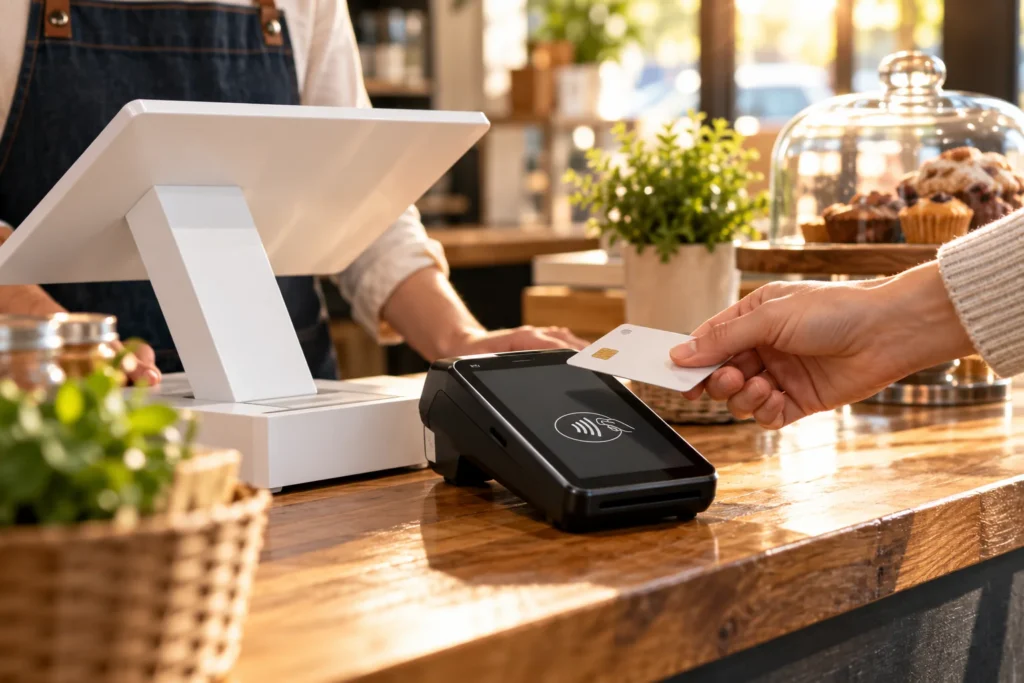

Secure credit card processing starts with protecting customer payment information wherever your business accepts cards. Whether customers pay at a checkout counter, through a website, over the phone, or using a mobile device, merchants need appropriate payment technology, secure procedures, employee training, and an understanding of their PCI DSS responsibilities.
Accepting credit cards should make it easier to serve customers. It should not expose their sensitive payment information through outdated equipment, unprotected records, poorly configured websites, or preventable employee mistakes.
I’ve worked with small businesses in the merchant services industry since we founded Valued Merchant Services in 2006. One thing I’ve learned is that payment security involves much more than choosing a credit card terminal.
A business may have modern equipment and still expose payment information by saving card numbers in an email account. Another may use a secure payment gateway but leave its website vulnerable through neglected software or compromised scripts.
In this guide, I’ll explain ten practical steps businesses can use to strengthen secure credit card processing, understand PCI compliance, and protect payment information across different sales channels.
Secure Credit Card Processing: Quick Checklist
10 Essentials for Safer Card Acceptance
- Use supported EMV and contactless payment equipment.
- Understand and maintain your applicable PCI DSS requirements.
- Minimize how much cardholder information your business handles.
- Choose appropriately secured online checkout and payment tools.
- Inspect payment devices for tampering or unauthorized replacement.
- Protect employee accounts, credentials, and administrative access.
- Maintain updated payment software and secure business networks.
- Handle phone payments, recurring billing, and refunds carefully.
- Train employees and monitor payment-related warning signs.
- Prepare a response plan for suspected payment-data incidents.
Specific compliance requirements depend on your card acceptance methods, payment systems, provider relationships, and applicable validation program. No security measure eliminates every risk.
How Does Secure Credit Card Processing Work?
Every card payment involves collecting the required payment information, sending an authorization request through the appropriate processing infrastructure, and handling the transaction under the applicable card-network rules.
Secure credit card processing is designed to protect sensitive information during that process and reduce unnecessary exposure within the merchant’s systems.
Depending on the payment setup, a transaction may involve:
- An EMV or contactless payment terminal
- A point-of-sale system
- A payment gateway or hosted checkout
- A processor and acquiring institution
- One or more payment card networks
- The customer’s card-issuing institution
The equipment and software must work together in an approved configuration.
Authorization Is Not a Security Guarantee
When a payment receives approval, the issuing institution has authorized the transaction under its applicable procedures.
That does not necessarily prove the purchaser is the legitimate cardholder. Nor does it guarantee that the merchant will never receive a dispute.
Similarly, encryption and security technology can reduce exposure to certain risks, but they do not eliminate every way a business may experience fraud or a data compromise.
Secure payment acceptance requires both appropriate technology and good business procedures.
What Makes EMV and Contactless Payments Different?
EMV chip and contactless transactions use security methods designed to protect payment information and make certain counterfeit-card attacks more difficult.
For eligible transactions, EMV technology generates transaction-specific cryptographic information that helps the issuer authenticate the payment.
That is different from the comparatively static information associated with traditional magnetic-stripe transactions.
However, it would be incorrect to say that EMV chips contain no cardholder information. They can contain payment application data, while the security design helps protect transactions against particular types of misuse.
EMV also does not eliminate lost-card fraud, online fraud, social engineering, or disputes involving products and services.
For a broader look at payment acceptance methods, read our guide to accepting credit card payments.
10 Steps to Strengthen Secure Credit Card Processing
1. Use Supported EMV and Contactless Payment Equipment
Start by reviewing the devices your business uses to collect card payments.
Modern, properly configured chip and contactless payment equipment helps reduce certain risks associated with older magnetic-stripe acceptance.
Depending on the business, suitable equipment may include:
- Countertop payment terminals
- Integrated retail POS systems
- Restaurant payment devices
- Wireless or mobile card terminals
- Supported smartphone payment acceptance solutions
The important question is not simply whether the device accepts payments. It is whether the equipment, software, and processing relationship are supported and maintained appropriately.
For example, a retailer replacing an outdated swipe-only reader should verify that the replacement supports the necessary EMV, contactless, and debit card functions.
Do not assume that every chip transaction requires a PIN or that every transaction using EMV technology has identical fraud protections.
2. Understand Your PCI DSS Requirements
The Payment Card Industry Data Security Standard, or PCI DSS, establishes baseline technical and operational requirements for protecting payment account information.
As of October 2026, the current standard is PCI DSS version 4.0.1.
PCI DSS applies to organizations involved in storing, processing, or transmitting applicable payment account data, as well as environments that can affect its security.
Your precise requirements depend on your payment setup and the compliance program administered by the relevant payment brands or acquiring institution.
For example, a merchant using a properly implemented outsourced payment page may have a different assessment scope from a business that directly stores and processes cardholder data.
Outsourcing payment processing can reduce applicable requirements, but it does not automatically eliminate the merchant’s responsibility to oversee its payment providers and protect relevant systems.
The PCI Security Standards Council publishes the current standard and related resources.
Ask your processor or compliance provider which validation process applies to your business rather than assuming every merchant completes the same questionnaire.
3. Minimize the Cardholder Information You Handle
One of the most practical ways to reduce security exposure is to avoid collecting or retaining sensitive payment information when your business does not need it.
That means reviewing how employees handle:
- Card numbers provided by customers
- Paper forms containing payment details
- Customer emails and messages
- Recordings of telephone transactions
- Saved payment methods used for recurring billing
- Spreadsheets, notes, and other internal records
For example, a service company should not save customers’ full credit card numbers in a shared spreadsheet to make future billing easier.
Instead, it may be able to use an eligible payment provider’s approved card-on-file tokenization service.
Tokenization allows a supported system to reference a securely stored payment method without retaining the full card number in the merchant’s ordinary business records.
However, tokenization does not automatically eliminate all PCI requirements.
Never Store Card Security Codes After Authorization
Card verification codes, often called CVV, CVC, or CID, are sensitive authentication data.
Merchants may be permitted to collect those codes for appropriate card-not-present authorization, but PCI DSS prohibits retaining them after authorization, even in encrypted form.
This restriction also matters for recurring payments. A business cannot simply keep the card security code on file because the customer expects another charge next month.
The PCI Security Standards Council explains the prohibition and its application to payment systems.
4. Choose Secure Online Checkout and Payment Tools
Businesses accepting payments online need to protect the checkout process and the systems that can affect it.
One approach is to use an approved hosted payment page operated by a payment service provider.
Another is to use compatible embedded payment components that securely collect and transmit payment information through the provider’s systems.
These arrangements may reduce the amount of card data that reaches the merchant’s own servers, but the security responsibilities are not identical.
For example, a website using an embedded third-party payment form can still face risks from malicious scripts that change or interfere with the checkout experience.
PCI DSS v4.0.1 includes relevant requirements for payment page security. The exact applicable controls and SAQ eligibility depend on the integration.
The PCI Security Standards Council’s SAQ A payment-page guidance explains how certain embedded payment forms differ from fully redirected checkout arrangements.
Our separate online credit card processing guide covers gateway selection, checkout options, integrations, and pricing in greater detail.
5. Inspect Payment Terminals for Tampering
A payment terminal can become a target for criminal tampering or unauthorized replacement.
Depending on the merchant’s applicable PCI DSS scope, businesses may need procedures for maintaining device inventories, inspecting terminals, and training employees to recognize suspicious activity.
Practical measures include:
- Maintain a record of deployed terminals and their identifying details.
- Inspect devices periodically according to the applicable security procedure.
- Look for damaged housings, unfamiliar attachments, or unexpected changes.
- Verify replacements and service visits through authorized provider contacts.
- Restrict access to devices and storage areas where appropriate.
- Escalate suspicious equipment immediately.
For example, if a restaurant employee notices that a card reader has an unfamiliar attachment or appears to have been opened, staff should stop using that device and follow the provider’s incident procedures.
Do not continue accepting payments through suspicious equipment simply because transactions still appear to work.
The PCI SSC’s guidance on payment-terminal inspections explains the applicable device-security considerations.
6. Protect Employee Accounts and Administrative Access
A secure payment platform can be undermined when employees share passwords, use unnecessary administrative privileges, or fall for credential theft.
Review which employees can:
- Access payment administration settings
- Issue refunds
- Change deposit or banking information
- View customer records
- Install applications or integrations
- Modify transaction reporting
Assign appropriate individual accounts and permissions rather than giving every employee the same administrator login.
Where supported or required, enable multifactor authentication and follow the provider’s credential-management procedures.
For example, a cashier may need to process sales and issue limited refunds, while a manager handles configuration changes and sensitive account updates.
The goal is to provide employees with the access necessary for their work without exposing more systems than necessary.
7. Keep Payment Systems and Networks Updated
Security updates address known weaknesses in software, devices, and supporting infrastructure.
A business should establish an appropriate process for updating:
- POS software and approved payment applications
- Compatible payment terminal firmware
- Ecommerce platforms and plugins
- Computers used for payment administration
- Network equipment and supported operating systems
Use authorized update procedures and coordinate with the payment provider when it manages the equipment.
Do not install unknown software directly onto payment devices or assume that every internet-connected system can be updated without vendor guidance.
Business networks should also use appropriate access controls and configurations.
For example, a café offering guest Wi-Fi should evaluate whether guest access is appropriately separated from systems used for payment processing.
Exact network-segmentation and scanning requirements depend on the merchant’s environment and applicable PCI DSS obligations.
8. Handle Phone Payments, Recurring Billing, and Refunds Carefully
Some businesses accept payments over the phone or through electronic invoices.
These methods can be appropriate when supported by the processing provider, but they require careful handling of cardholder information.
For telephone payments, employees should use the approved payment entry process and understand whether calls are recorded.
If a call-recording system could capture cardholder or sensitive authentication data, the business should work with its provider to implement appropriate protections.
Do not ask customers to send complete card information through ordinary email or text messages.
Instead, direct them to a suitable secure payment page or another approved method.
For recurring payments, use authorized card-on-file functionality and maintain required customer consent and billing records.
For refunds, follow documented procedures and maintain appropriate transaction records.
Refund controls can also help reduce internal misuse, such as unauthorized credits to unrelated cards.
9. Train Employees and Monitor Payment Activity
Payment security procedures only work when employees know how to use them.
Staff members should understand:
- Which devices and payment methods are approved
- How to identify suspicious device changes
- When manual card entry is permitted
- How to handle cardholder information safely
- Who can approve refunds or change payment settings
- How to recognize suspicious support requests
- Who to contact about a suspected incident
For example, a fraudulent caller may claim to be from a processing company’s technical support department and ask an employee to install software or disclose login credentials.
Employees should verify such requests using the provider’s established contact information rather than trusting the number supplied by an unexpected caller.
Businesses should also review unusual refunds, transaction activity, new account access, and other relevant warning signs.
For a separate guide focused specifically on suspicious transactions and fraud prevention, see our credit card fraud prevention tips for small businesses.
10. Prepare an Incident Response Plan
Even businesses that take appropriate precautions can experience suspicious activity or a potential payment-data incident.
A useful response plan explains what employees should do and whom they should notify.
For example, a business might discover that a payment terminal has been tampered with or that an unauthorized party accessed a payment administration account.
The appropriate response may include:
- Stop using the affected device or payment workflow if necessary to prevent further exposure.
- Notify the designated manager and payment provider through verified contact channels.
- Preserve relevant records and evidence according to the provider’s instructions.
- Follow the incident-response requirements of the applicable processor, acquirer, payment brands, and laws.
- Work with qualified professionals where technical investigation or formal reporting is necessary.
- Correct the underlying weakness before restoring normal operations.
A suspected payment-data breach should not be handled solely as a routine customer-service problem.
Merchants should follow their incident-response obligations and avoid deleting potential evidence or making unsupported assumptions about the extent of the incident.
Secure Credit Card Processing by Payment Channel
A countertop retailer, an ecommerce store, and a service company accepting payments by telephone may all use credit cards, but their operational security considerations differ.
| Payment Channel | Primary Security Considerations | Practical Action |
|---|---|---|
| Retail checkout | Device security, EMV acceptance, employee permissions | Use supported equipment and inspect terminals. |
| Restaurant POS | Shared devices, tips, refunds, network configuration | Use role-based access and secure POS procedures. |
| Ecommerce checkout | Payment page integrity, scripts, gateway configuration | Use supported checkout and current website security controls. |
| Phone payments | Manual entry, call recordings, sensitive data handling | Use approved payment tools and protect call records. |
| Mobile payments | Device security, connectivity, lost equipment | Use supported applications, access controls, and device procedures. |
| Recurring billing | Authorization, saved payment methods, account access | Use appropriate tokenization and documented billing authorization. |
Security practices should match how payments are actually accepted rather than relying on one generic checklist for every business.
PCI DSS Compliance: What Small Business Owners Should Know
PCI compliance is sometimes presented as a simple checkbox or optional service fee. In reality, the applicable obligations depend on the payment environment and the validation requirements established through the appropriate card-brand or acquiring program.
Does Every Business That Accepts Cards Need PCI Compliance?
Businesses involved in processing payment card data generally fall within PCI DSS applicability, although the specific requirements and validation processes vary.
Even if an outside provider performs the payment processing, the merchant may still have responsibilities related to service-provider oversight, access controls, website security, and other applicable areas.
For details, see the PCI SSC’s explanation of outsourced processing and merchant responsibilities.
What Is a PCI Self-Assessment Questionnaire?
A Self-Assessment Questionnaire, or SAQ, is a validation tool used by eligible entities to assess applicable PCI DSS requirements.
Different SAQ types are designed for different payment environments and eligibility conditions.
For example, a qualifying merchant using an outsourced ecommerce payment service may have different requirements from one operating a more complex environment that directly handles card data.
Do not select an SAQ solely because it is shorter. Confirm the correct eligibility requirements with your acquirer or compliance provider.
Does Encryption Make a Business PCI Compliant?
No. Encryption can be an important security control, but it is only one part of protecting payment information.
Similarly, a device described as encrypted should not automatically be assumed to constitute a PCI-listed point-to-point encryption solution.
A validated PCI P2PE solution has specific requirements, an approved configuration, and a listing under the applicable program.
Using an eligible validated solution can reduce a merchant’s PCI scope, but it does not eliminate every responsibility.
Read the PCI SSC’s overview of Point-to-Point Encryption for more information.
Does PCI Compliance Guarantee Protection Against Fraud?
No. PCI DSS is designed to establish security controls that help protect payment account information.
It is not a guarantee against every cybersecurity incident, fraudulent transaction, customer dispute, or operational loss.
Merchants need to combine appropriate compliance controls with ongoing security practices and customer-service procedures.
Payment Security Examples for Different Businesses
Here are four practical examples showing how security priorities can differ.
Example 1: A Retail Store With Two Registers
A small clothing store accepts cards at two checkout counters.
Its most relevant routine security procedures may include maintaining a terminal inventory, inspecting payment devices, protecting administrator accounts, and reviewing refund permissions.
If an unfamiliar device appears on a payment terminal, staff should know exactly whom to contact.
Example 2: A Restaurant With Several Employees
A restaurant may have many employees taking orders, adjusting checks, and accepting payments.
Individual employee credentials, controlled refund permissions, secure networking, and appropriate device-handling procedures become especially important.
For example, staff should not share one administrator password across every register or payment device.
Example 3: An Ecommerce Retailer
An online store uses a payment gateway to accept customer orders.
Its security priorities include selecting an approved checkout integration, maintaining website software, protecting administrative accounts, and understanding applicable payment-page script controls.
The retailer should not assume that outsourcing the card entry fields automatically protects the entire website from compromise.
Example 4: A Property Management or Service Company
An invoice-driven business may accept payments through secure links, a virtual terminal, or a recurring billing service.
Its procedures should focus on protecting customer payment information, documenting recurring authorization, managing employee access, and handling payment requests securely.
Staff should not save complete payment card details in ordinary email threads or shared documents.
These examples are illustrative. Actual PCI DSS requirements depend on the merchant’s specific environment and processing arrangement.
A Practical Payment Security Action Plan for Small Businesses
You do not need to become a cybersecurity engineer to ask useful questions about your payment environment.
Start by documenting how your business accepts payments and which systems handle payment information.
First: Identify Your Payment Systems
List the terminals, POS devices, ecommerce tools, virtual terminals, and payment applications used across the business.
Identify the provider responsible for each system.
Next: Review How Payment Data Is Handled
Find out whether any employee computers, email accounts, spreadsheets, recordings, or other business systems store sensitive card information.
If you discover unnecessary storage, consult the payment provider about the appropriate remediation and approved alternatives.
Then: Confirm the Applicable Security Requirements
Contact your acquiring institution or compliance provider to identify the PCI validation process that applies to your payment environment.
Ask what responsibilities the payment provider handles and which remain with your business.
Finally: Train Staff and Schedule Reviews
Establish a practical routine for appropriate device inspections, account access reviews, software updates, and employee training.
Make sure staff know how to report a suspicious transaction, unfamiliar device, or unexpected technical support request.
Payment security should become a normal part of running the business rather than something reviewed only when an annual questionnaire arrives.
How Valued Merchant Services Helps Businesses Evaluate Secure Payment Options
At Valued Merchant Services, we help businesses evaluate payment acceptance equipment, POS systems, ecommerce gateways, and processing arrangements suited to their needs.
We’ve worked with small business owners since 2006, and our approach begins with understanding the systems a merchant already uses.
That includes the types of payments accepted, equipment compatibility, available security features, software requirements, and ongoing support.
For example, a retailer with outdated equipment may benefit from a modern EMV and contactless terminal.
An ecommerce business may need a better-supported checkout integration. An invoice-driven company may benefit from approved hosted payment links instead of collecting card details manually.
We can help merchants review available solutions and coordinate with the appropriate processing or technology provider to understand their requirements.
Formal PCI DSS compliance assessments and security certifications, where needed, should be completed through the appropriate qualified providers and validation processes.
We also believe that an equipment or processor change should only happen when it offers a meaningful advantage.
If your existing payment system remains suitable and competitively priced, we’ll tell you when keeping it makes more sense.
That’s part of our commitment to putting people before profits.
Are Your Payment Systems Ready for Today’s Business?
Valued Merchant Services can help you evaluate your existing payment equipment, supported security capabilities, and processing options. We’ll explain potential improvements and whether changing anything is actually necessary.
Talk With Our Merchant Services Team
You can also call 800-531-8575 or email support@valuedmerchants.com.
No obligation to change providers. Payment equipment, security features, integrations, eligibility, and fees vary by solution. VMS does not guarantee protection against every security incident or transaction dispute.
Frequently Asked Questions About Secure Credit Card Processing
What is secure credit card processing?
Secure credit card processing involves using appropriate payment technology, data protection measures, access controls, and operating procedures to reduce the exposure of sensitive payment information. The applicable requirements depend on how the business accepts cards.
Are EMV chip transactions completely secure?
No. EMV helps reduce certain counterfeit-card risks through transaction-specific security features. However, it does not eliminate every type of fraud, card misuse, payment dispute, or data-security threat.
Do small businesses have to comply with PCI DSS?
Businesses accepting payment cards generally have applicable PCI DSS responsibilities, although the specific requirements and validation methods vary. Merchants should confirm their obligations with the acquiring institution or organization managing their compliance program.
Can I accept credit cards securely without storing card numbers?
Yes. Many approved payment providers offer hosted checkout, payment links, or tokenization services that can reduce the need for merchants to retain card details. The precise PCI scope and security responsibilities depend on the implementation.
Is it safe to take a customer’s credit card information over the phone?
Telephone payments can be accepted using an appropriate provider-supported process. However, merchants must protect cardholder information and account for potential exposure through call recordings, employee workstations, and other systems. A secure payment link may be an alternative.
Can a business store CVV codes for recurring payments?
No. PCI DSS prohibits merchants from storing card verification codes after authorization, including when the customer has authorized recurring transactions. Use an approved recurring billing or tokenized payment system instead.
Does using a payment gateway eliminate PCI requirements?
No. Outsourcing payment functions can reduce the merchant’s direct handling of sensitive information, but it does not automatically eliminate all PCI DSS obligations. Requirements depend on the checkout integration and the applicable compliance program.
How often should payment terminals be inspected?
PCI DSS requires periodic inspections for applicable card-present point-of-interaction devices, with the frequency determined through the organization’s documented risk assessment and applicable requirements. Merchants should follow their approved procedures and train staff to report unusual devices or changes immediately.
Can Valued Merchant Services help improve payment security?
Valued Merchant Services can help eligible merchants evaluate supported payment equipment, processing options, and available security-related technology. Formal compliance assessments and certification requirements should be handled through the appropriate qualified providers and acquiring programs.
Final Thoughts: Protect Payments Without Making Business Complicated
Secure credit card processing isn’t achieved by purchasing one device or checking one compliance box.
It depends on how your business handles payments, how well its equipment and software are maintained, and whether employees consistently follow good security procedures.
For a retail store, that might start with inspecting terminals and protecting POS access.
For an ecommerce company, it might mean improving checkout security and reducing exposure to sensitive card information.
For a service company, it might involve replacing informal payment collection with appropriate hosted invoices or secure virtual terminal tools.
My advice is to start with the actual systems your employees and customers use every day.
Identify avoidable exposure. Ask your processing provider about the security responsibilities that apply. Train your team. Keep the systems maintained. And make it easy for employees to report problems.
At Valued Merchant Services, we’ve believed since 2006 that good payment technology should support both the business and the people it serves.
The most dependable payment setup is one that combines suitable equipment, responsible information handling, practical employee procedures, and the right support when questions arise.
Sources and Additional Reading
The following primary sources provide official information about payment account data protection, merchant responsibilities, and PCI requirements.
- PCI Security Standards Council: PCI DSS
- PCI Security Standards Council: Merchant Security Resources
- PCI SSC: Outsourced Processing Responsibilities
- PCI SSC: SAQ A and Ecommerce Payment-Page Scripts
- PCI SSC: Card Verification Code Storage Requirements
- PCI SSC: Point-to-Point Encryption
- PCI SSC: Data Security Essentials for Small Merchants
Educational information only. PCI DSS requirements, card-network rules, security standards, and provider capabilities can change. Merchants should confirm their specific compliance and incident-response obligations with their acquirer, payment provider, qualified assessor, or other appropriate professional. This article does not provide a compliance certification or security guarantee.
